





 By
jeff
Jeffrey Oakley, Harrisburg, is an IT strategy and technology consultant who helps local organizations connect technology investments to measurable business objectives. His services cover IT strategy and technology roadmaps, digital transformation consulting, AI and automation solutions, AI integration and development, AI powered creative automation, cloud infrastructure planning, data analytics, custom software development, and website and mobile app development. The approach is business first, phased, and scalable.
Technology spending is one of the largest and least understood line items in a modern organization. Software subscriptions accumulate, systems age, and websites go unmaintained. Meanwhile, leadership is expected to decide whether to invest in AI, cloud platforms, or custom tools, often without a clear framework for deciding.
This is where structured consulting delivers value. Jeffrey Oakley Harrisburg, works with organizations to bring order to these decisions by starting with the business objective and working backward to the technology that serves it.
This article explains what IT strategy involves, how AI and automation fit into everyday operations, what each consulting service delivers, and how to evaluate your own readiness. It is intended as a reference for owners, executives, and operations leaders.
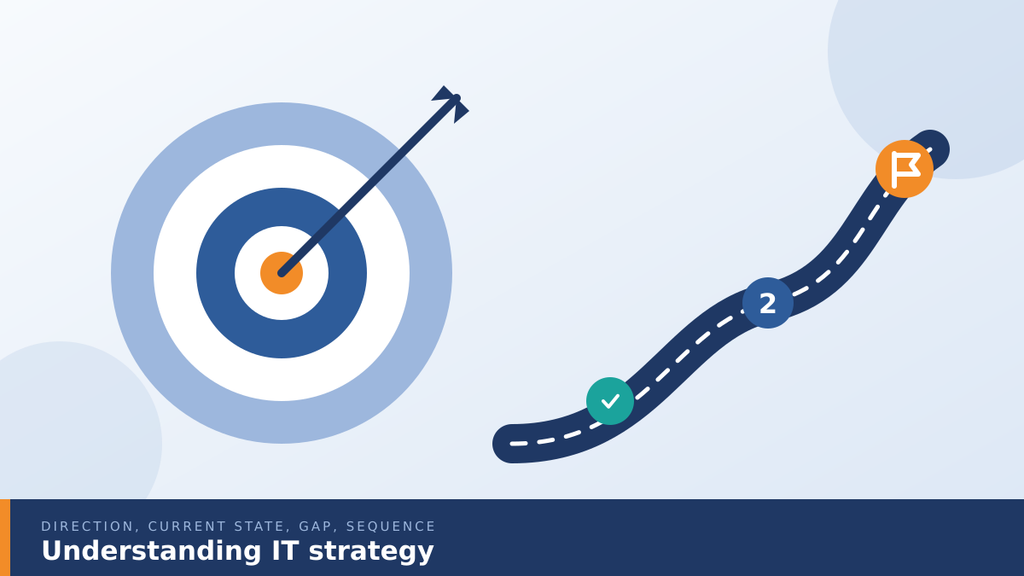
IT strategy is a documented plan describing how technology will support organizational goals over a defined period, typically three to five years. It addresses four core questions. The first is direction: what outcomes does the business need, such as growth, efficiency, compliance, or a better customer experience? The second is the current state, meaning which systems, tools, data and skills already exist. The third is the gap between where the organization is and where it needs to be, and the fourth is sequence, meaning what should be done first, at what cost, and with what expected return.
Organizations without a strategy tend to buy reactively. A system fails, so it is replaced. A competitor launches an app, so one is commissioned in a hurry. The result is a collection of disconnected tools that cost more to support and slow teams down.
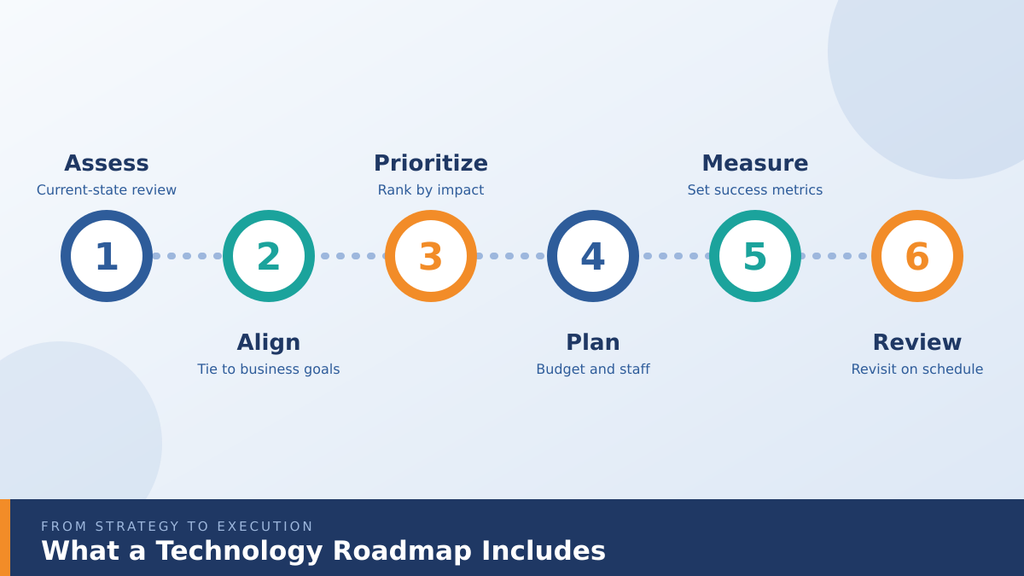
A roadmap converts strategy into an executable plan. Under the framework used by Jeffrey Oakley, Harrisburg, a roadmap typically contains six parts.
It starts with a current state assessment, which is an inventory of applications, infrastructure, websites, data sources, and the workflows linking them. Business alignment ties every proposed initiative to a stated objective, so nothing is built without a reason, and prioritization ranks projects by expected impact against effort and cost, which keeps early investment focused on high value work. Resource planning maps budget, internal staff time, external support, and timelines before work begins.
Each initiative also gets a measurable success metric, such as hours saved, response time reduced, or leads generated. Finally, review cycles revisit the roadmap on a schedule, because priorities change and a plan filed away goes stale.
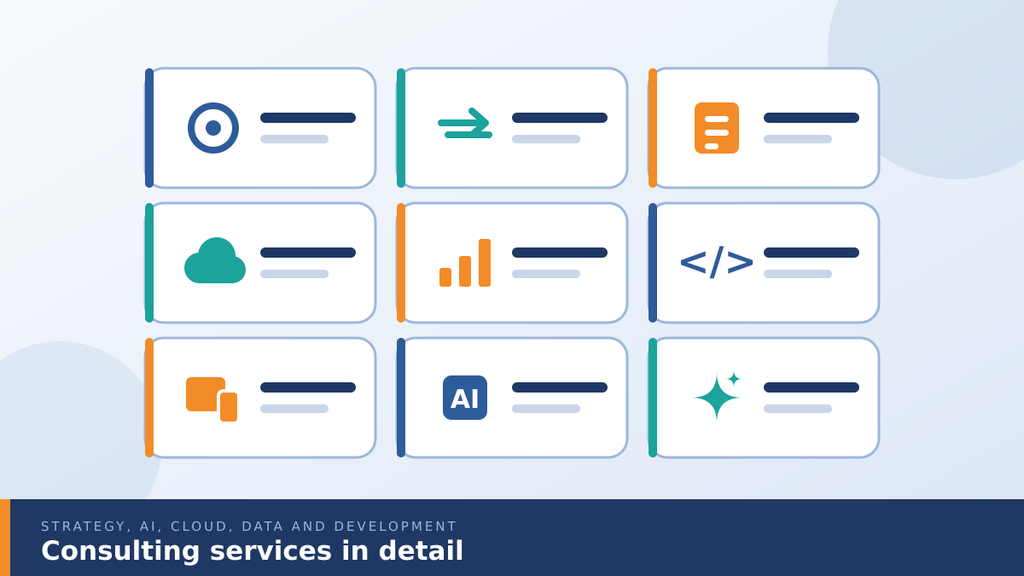
The following services are available through Jeffrey Oakley, Harrisburg. Each is described by what it involves and where it applies.
IT strategy and technology roadmaps are the foundation of the engagement. They combine assessment, goal setting, and phased planning into a single document that guides future decisions, and they suit any organization whose technology has grown without clear direction. Digital transformation consulting replaces manual or paper based processes with integrated digital workflows. Examples include automating approvals, consolidating records into a central database, and building customer self service portals, and the aim is operational efficiency and not technology adoption for its own sake.
Productivity losses often hide in routine processes such as duplicated data entry, unclear handoffs, and approval delays. A workflow review documents how work actually moves, identifies friction, and recommends changes, and resource planning then aligns staff, tools, and budget with those changes. Cloud infrastructure planning matters because cloud adoption can lower hardware costs and improve remote access, but only with careful planning. This service evaluates which workloads belong in the cloud, how to approach security, backup, and recovery, and how to keep ongoing costs predictable.
Most organizations already hold valuable data in accounting systems, CRMs, and spreadsheets. Data analytics and insights work to consolidate that information into reports and dashboards so that decisions rely on evidence instead of assumption. When standard software forces awkward workarounds, custom software development can be more cost effective. It covers requirements gathering, design, building, and refinement around the way a team actually operates.
A website is frequently a customer’s first impression. Website and mobile app development focuses on performance, mobile responsiveness, clear navigation, and conversion paths, along with mobile applications where they serve a genuine need.
AI integration and development embed AI capabilities, such as intelligent assistants, document processing,, and predictive features, into existing systems. Use cases are selected for practical return, like faster support responses or reduced manual data entry. AI powered creative automation is aimed at content and marketing teams, who spend considerable time on repetitive production tasks. It applies AI to drafting, formatting, resizing, and scheduling, while human reviewers retain control of quality and brand voice.
AI adoption is most successful when it targets a defined, repeatable task. In customer support, virtual assistants can answer routine questions, which means faster responses and extended availability. In administration, invoice sorting and document data extraction mean less manual entry and fewer errors. In marketing, draft generation, scheduling, and content repurposing give consistent output and save production time, and in operations, pattern analysis in sales or inventory data gives earlier visibility into trends.
A sound adoption path follows four steps: select one workflow, pilot an AI tool, measure the outcome against a baseline, and expand only when results justify it. This staged method limits risk and builds internal confidence.
Reputation is formed through repeated experiences, such as whether an order arrives on time, whether a question is answered promptly, and whether a website works when a customer needs it.
Technology underpins each of those moments. A fast, accurate website builds credibility, and automated follow ups keep communication consistent. Clean data helps an organization detect service problems before they become public complaints. The systems work performed by Jeffrey Oakley, Harrisburg, therefore influences how customers perceive the businesses he supports.
Online visibility also matters. Search engines and AI driven answer tools increasingly favor websites that publish clear, accurate, well structured information. Organizations that maintain consistent business details and publish genuinely helpful content are easier to find and easier to trust.
Small and growing businesses need right sized plans that support expansion without overspending. Professional services firms benefit from streamlined systems that reduce administrative load and give staff more time with clients, and operations driven organizations gain from technology that improves daily performance and makes resources easier to manage.
Common signs that strategic guidance would help include repetitive manual work, systems that do not share data, unclear technology budgets, and uncertainty about whether to invest in AI or cloud services.
Six criteria are worth checking. A business first approach means that questions about goals come before product recommendations, and clear communication means that technical choices are explained in plain language. Planning should be adaptable, with roadmaps that flex as priorities shift, and the scope should be defined, with deliverables and costs agreed before work starts.
Availability should continue, because technology planning is ongoing and not a one time report. Regional understanding also helps, since familiarity with the Harrisburg business community makes it easier to address realistic budget and staffing conditions.
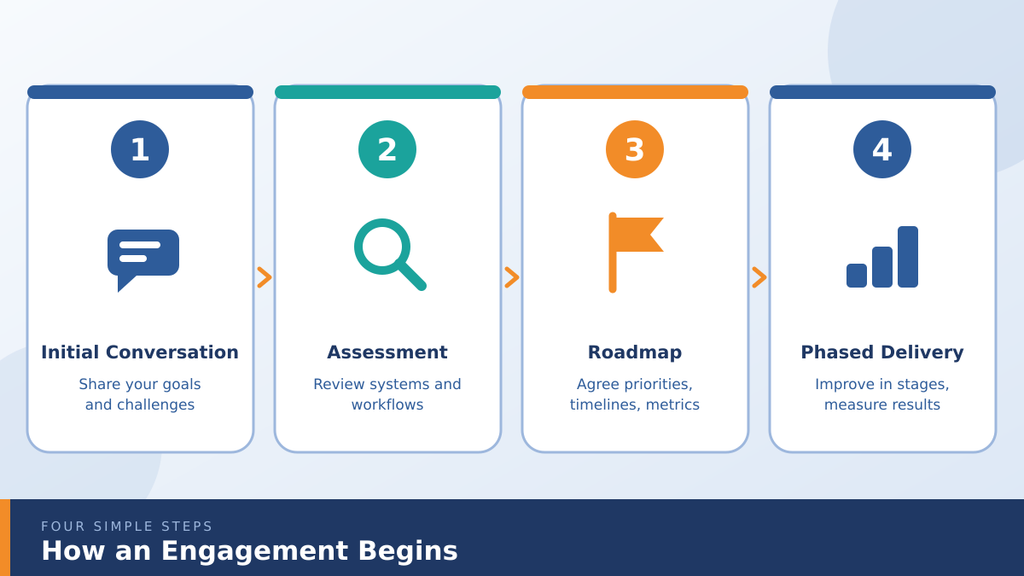
1. Initial conversation. Discuss current challenges and objectives.
2. Assessment. Review systems, workflows, and pain points.
3. Roadmap. Agree on priorities, timelines, and measures of success.
4. Phased delivery. Implement improvements in stages, measuring results as each phase completes.
Jeff can be reached at +1 617-684-5545 or jeffoakleyusa@gmail.com, or through the contact form at jeffreyoakleyharrisburg.com.
He is an IT strategy and technology consultant who helps organizations align technology investments with business goals through planning, AI integration, development, and workflow improvement.
IT strategy, digital transformation consulting, AI and automation solutions, AI integration and development, AI powered creative automation, cloud infrastructure planning, data analytics, custom software development, and website and mobile app development.
No. Small and growing businesses often gain the most, because right sized planning prevents spending on tools they do not need.
Not necessarily. AI is worthwhile when it addresses a defined problem. A strategic review identifies where it adds value and where it does not.
It ranks projects by impact, allocates resources and sets measurable targets, which keeps spending focused and predictable.
Call, email or submit the contact form to schedule a free conversation.
Jeff Oakley is an IT strategy and technology consultant serving Harrisburg organizations. The approach starts with business objectives and then selects technology. Services span strategy, digital transformation, cloud planning, analytics, custom software, web and mobile development, AI integration and creative automation, and a roadmap includes assessment, prioritization, resource planning and success metrics. Technology supports reputation through reliability, consistency and online visibility, and the first step is a free conversation.
Effective technology management is a matter of sequence: define the objective, assess the current state, prioritize, then build. When that order is respected, each system and automation has a purpose and a measurable result. That disciplined, practical method is what Jeffrey Oakley, Harrisburg offers to organizations looking to grow with confidence.